
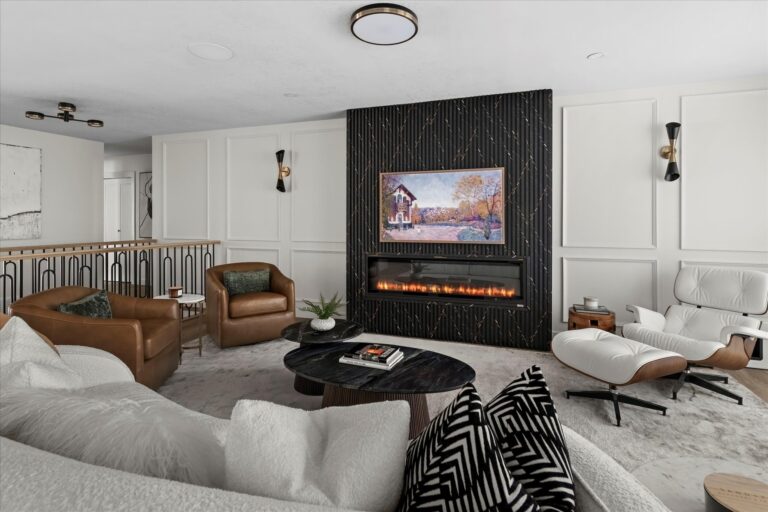
Some of Calgary’s most beautiful neighbourhoods are filled with homes that have incredible character. Communities like Rideau Park, Britannia, Elbow Park, and Mount Royal are known for their mature trees, elegant architecture, and homes that often feel more unique than newer builds.
But inside many of these houses, there’s a common challenge: poor layout design. The layouts were designed for a completely different era. Homes built decades ago were created around lifestyles that looked very different from how families live today. Kitchens were often separated from entertaining areas. Rooms were divided into smaller spaces with very specific purposes. Storage was limited, and natural light was not always prioritized the way it is now. While these homes have tremendous charm, the layouts can feel disconnected or inefficient for modern living.
For homeowners considering a renovation, improving the layout of the home often has a far greater impact than simply updating finishes. At HAUS Interiors, layout planning is often the single most transformative part of the design process.
Michael Anderson, HAUS Interior’s lead designer says, “a great renovation is 20% aesthetic and 80% architecture. In older Calgary homes, the layout is usually the biggest barrier to enjoyment. We focus on the ‘human’ side of the floor plan—how you move, where you gather, and where the light falls. Once the layout is corrected, the house stops working against you and starts working for you. That is the true value of design.”
Why Older Calgary Homes Often Feel Disconnected From a Poor Layout Design
To understand why older homes feel different, it helps to understand how they were originally designed. Historically, kitchens were considered service areas rather than social spaces. Housing researchers such as the Harvard Joint Center for Housing Studies note that older homes were often designed with more segmented rooms and formal spaces, reflecting lifestyles that prioritized separation between cooking, dining, and entertaining areas.
Formal dining rooms were common, and entertaining spaces were clearly defined rather than flexible. While this structure worked well decades ago, many homeowners today prefer spaces that feel more connected and adaptable.
Modern living tends to prioritize interaction between rooms, improved natural light, and layouts that allow families to gather comfortably. Today’s homeowners often want spaces that allow them to cook while interacting with guests, supervise children while preparing meals, or move easily between the kitchen, dining area, and living spaces.
Achieving this type of environment often requires rethinking how the home is organized. This shift is something we explore further in From Inspiration to Execution: Planning a Successful Home Renovation, where thoughtful planning turns renovation ideas into cohesive design strategies.
Common Layout Challenges in Older Calgary Homes
When designers begin evaluating older homes in Calgary, several layout patterns appear frequently. One of the most common is the closed kitchen. In many homes, kitchens are tucked behind walls or separated from the rest of the main floor. While this may have once helped contain cooking mess or noise, it can make the space feel isolated today.
Opening the kitchen to adjacent living areas often transforms how the home feels. Suddenly, natural light travels further through the space and the kitchen becomes part of everyday interaction rather than a separate room.
Another common challenge is the presence of multiple small rooms dividing the main floor. Older floor plans often separated living rooms, dining rooms, sitting rooms, and hallways into tightly defined spaces. While these rooms once served specific purposes, modern families often benefit from more flexible environments that can adapt to different activities.
Traffic flow is another issue designers encounter frequently. When layouts were not designed with modern furniture or appliances in mind, circulation through the home can feel awkward. Kitchens become bottlenecks, pathways feel cramped, and rooms may feel disconnected from each other. Thoughtful design planning allows these issues to be addressed before renovation begins.
The Hidden Costs of Poor Layout Design Planning
Many homeowners initially focus their renovation decisions around finishes. They think about countertops, cabinetry colours, lighting fixtures, or flooring materials. While these choices certainly influence the final appearance of a home, the layout of the space ultimately determines how successful the renovation will feel once completed. A poorly planned layout can lead to wasted square footage, poorly positioned lighting, insufficient storage, or furniture arrangements that feel awkward and uncomfortable.
Even beautifully finished spaces can feel frustrating if the layout does not support everyday living. More importantly, layout mistakes can be extremely expensive to correct once construction has already begun. That is why designers prioritize planning the layout first and selecting finishes later. This principle is closely related to the design philosophy discussed in How Interior Designers Help Prevent Expensive Renovation Mistakes, where strategic planning prevents costly revisions during construction.
Why Layout Planning Must Happen Before Construction
One of the most important stages of any renovation happens before demolition even begins. Renovation planning guides from organizations like National Association of the Remodeling Industry emphasize that clear design plans and layout decisions should be finalized before construction begins to prevent costly mid-project changes. Interior designers develop detailed plans that allow homeowners to understand how the space will function once the renovation is complete. These plans may include floor layouts, design concepts, lighting plans, and material palettes that show how the entire environment will work together.
This process allows homeowners to visualize the final result before construction begins. Without this level of planning, decisions often happen mid-project when contractors are already working in the home. Those last-minute decisions are what frequently lead to increased costs and delays.
Michael says, “planning isn’t just a set of drawings; it’s the foundation of your investment. At HAUS, we invest heavily in the pre-construction phase because it’s where we solve the problems that would otherwise cost ten times more to fix once the walls are open. A successful renovation is simply the result of an obsessively detailed plan.”
How Designers Improve Layout Flow
Interior designers approach layout planning with both functionality and aesthetics in mind. Sometimes the solution involves removing walls between key areas such as the kitchen and living room. This simple change can dramatically improve how the main floor feels by allowing light and sightlines to move through the space.
In other homes, the goal is not necessarily to create a completely open floor plan but to establish clearer zones within a larger space. Dining areas, living spaces, and entertaining zones can be defined through furniture placement, lighting design, or subtle architectural details rather than physical walls.
Designers also pay close attention to sightlines within the home. When entering a room, what the eye sees first has a powerful impact on how the space feels. Highlighting architectural features while minimizing less attractive elements helps create interiors that feel balanced and intentional. These strategies contribute to the timeless interiors discussed in How Designers Create Timeless Interiors Instead of Trendy Ones.
Renovating Older Homes While Preserving Character
One of the most rewarding aspects of renovating older Calgary homes is the opportunity to preserve the elements that make them special. Original hardwood flooring, detailed trim work, fireplaces, and built-in cabinetry often contribute significantly to the identity of the home.
Rather than removing these features, thoughtful renovations incorporate them into the updated design. The goal is not to erase the history of the home but to enhance it while improving how the space functions today. This balance between preservation and modernization is what allows older homes to feel both authentic and comfortable.
Renovation as a Long-Term Investment
When renovations focus only on cosmetic changes, the results often feel temporary. New finishes may improve the appearance of a room, but if the layout remains inefficient the underlying problems remain. Thoughtful renovations address the deeper structure of the space.
By investing in layout planning, durable materials, and cohesive design, homeowners create environments that remain functional and beautiful for decades. This approach aligns closely with the philosophy explored in Designing a Home That Ages Well for Long-Term Living, where renovations are designed to evolve alongside the homeowner’s lifestyle.
The HAUS Interiors Design Experience
Renovating a home involves far more than selecting finishes or hiring contractors. Successful projects require coordination between designers, trades, suppliers, and homeowners. HAUS Interiors provides a full-service design experience that simplifies this process. Clients benefit from a clear design vision, coordinated planning, thoughtful material selection, and a structured approach that guides the project from concept to completion. Rather than navigating dozens of decisions alone, homeowners move through the renovation process with clarity and support.
Michael says, “at HAUS, we don’t just deliver a set of drawings; we deliver a finished environment. The value of our structured process is that it protects the integrity of the design while protecting the homeowner’s time. We treat your renovation with the same precision and care as if it were our own home, ensuring that the journey is just as refined as the final result.”
Start Planning Your Renovation
If you own an older home in Calgary and are considering a renovation, the first step is understanding how the layout could better support the way you live today. Thoughtful planning can transform segmented floor plans into environments that feel open, cohesive, and welcoming while still preserving the character that makes these homes so special.
Book a Design Consultation
Every successful renovation begins with a conversation about how you want to live in your home. During a consultation with HAUS Interiors, you can explore renovation possibilities within your space, discuss layout improvements, and develop a clearer understanding of what your project could become. To begin planning your renovation, visit https://hausinteriors.ca/contact